Pentagon Grooming Standards: New Clean-Shaven Rules, Hair Policies and Military Waiver Changes

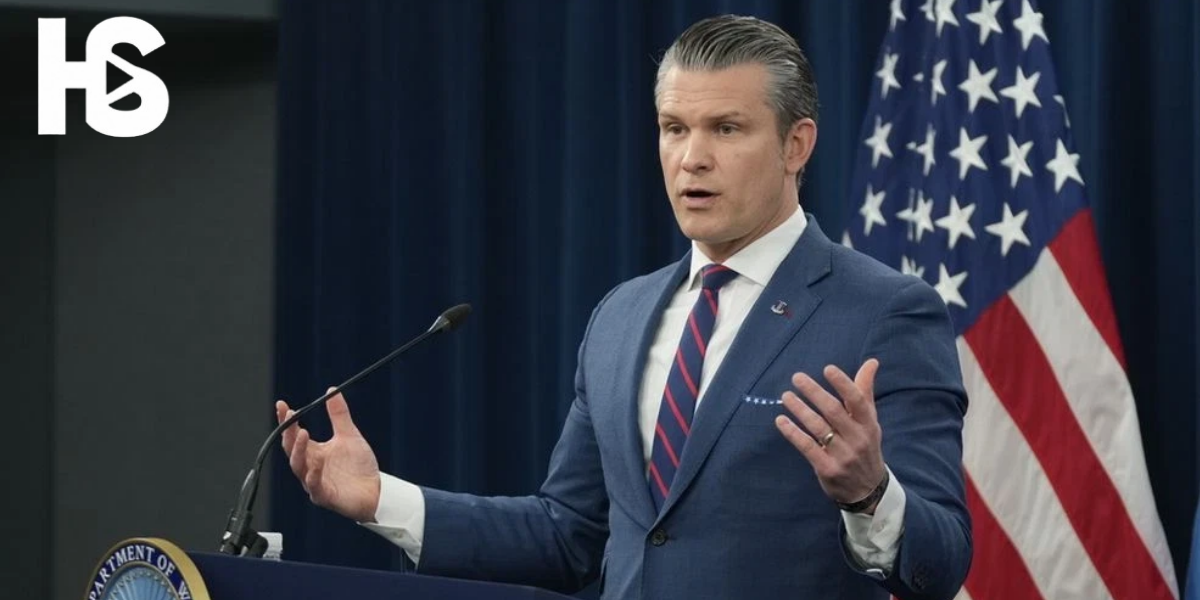
The Pentagon grooming standards have become considerably stricter as U.S. military leaders push for greater uniformity, discipline and professional appearance across the armed forces.
Under directives issued by Pete Hegseth, the military’s baseline facial-hair standard is a clean-shaven and neat appearance, with tighter controls on medical shaving waivers and stronger command responsibility for enforcing grooming rules. The changes are part of a broader effort to reinforce what department leadership describes as the military’s “warrior ethos.”
The policy does not simply concern whether a service member prefers to have a beard. It affects medical exemptions, commanders’ authority, treatment requirements, hairstyles and, depending on the military branch, cosmetics and other aspects of personal appearance.
What Are the New Pentagon Grooming Standards?
The central principle behind the updated policy is straightforward: military personnel are expected to maintain a professional, uniform appearance and, as the general rule, remain clean-shaven.
An August 20, 2025 memorandum stated that the U.S. military’s grooming standard is to be clean-shaven and neat in presentation. It also instructed the military departments to impose minimum department-wide requirements on medical exceptions to that standard.
Later implementation guidance reinforced the policy across the force. Under that guidance, beards, goatees and other facial hair are generally prohibited unless specifically authorized. Mustaches can still be worn when they comply with prescribed limits.
That distinction is important. The policy is strict, but describing it as an absolute ban on every form of facial hair would be inaccurate.
Clean-Shaven Military Policy Becomes the Baseline
The most visible part of the Pentagon grooming standards is the clean-shaven requirement.
The military’s stated baseline is now a clean-shaven face and neat military appearance. Department guidance also specifies limits on sideburns and prohibits beards, goatees and similar facial hair unless an approved exception applies.
Authorized mustaches remain possible. Under the implementation guidance, they must be neatly trimmed, cannot extend beyond the corners of the mouth and cannot interfere with areas needed to create a proper respirator seal.
The emphasis on respirator fit also highlights one of the practical arguments behind military facial-hair restrictions: certain protective equipment must create an effective seal against the face.
What Happens to Medical Shaving Waivers?
One of the most significant changes involves medical shaving waivers.
Some service members have medical conditions that make frequent shaving painful or medically problematic. One of the best-known examples is pseudofolliculitis barbae, commonly known as razor bumps, which can cause inflammation and painful lesions after shaving.
Previous practices could allow some personnel to remain on shaving profiles for extended periods. The updated policy places far greater emphasis on treatment and returning the service member to the normal grooming standard.
Under the August 2025 directive:
- A military medical officer provides a written recommendation regarding a shaving waiver.
- The service member’s commander has final approval authority.
- Personnel who receive an approved medical waiver must participate in a medical treatment plan.
- Commanders are directed to initiate separation proceedings when a service member still requires a shaving waiver after more than one year of medical treatment.
These provisions represent a major shift away from treating long-term medical shaving profiles as routine exceptions.
Does a One-Year Shaving Waiver Automatically Mean Separation?
Not quite.
This is an important detail because headlines describing the policy can make the process sound more automatic than the official guidance indicates.
The memorandum directs unit commanders to initiate separation when a service member continues to require a shaving waiver after more than one year of medical treatment. However, it also gives military leaders responsibility for evaluating whether retaining an individual is appropriate.
Pentagon guidance subsequently explained that cases are subject to individual review involving the service member’s medical provider and commander. That means reaching the one-year point does not necessarily result in an immediate discharge on that exact date.
The distinction is between initiating an administrative process and an instantaneous, automatic separation.
Commanders Now Have the Final Say on Medical Shaving Waivers
Another important part of the policy concerns who actually approves an exemption.
Military medical officers can evaluate a condition and recommend that a shaving waiver be issued. But the medical recommendation itself is not the final authorization.
The service member’s commander holds the ultimate approval authority.
This structure makes grooming compliance both a medical and command issue.
It also means commanders are expected to apply consistent criteria while considering military interests such as safety, readiness and uniformity.
Treatment Is Required During a Medical Waiver
A service member cannot simply receive an approved shaving waiver and leave the underlying condition unaddressed indefinitely.
The updated policy explicitly requires personnel with approved medical shaving waivers to participate in a treatment plan.
The treatment itself may differ from person to person because the medical condition and its severity can vary.
The broader objective is to determine whether the condition can be treated sufficiently for the individual to return to normal shaving requirements.
This treatment-focused approach is one reason the one-year rule matters: the policy evaluates whether a service member continues to require an exception after undergoing medical treatment, rather than simply measuring one year from the day a waiver was first issued.
What About Religious Beard Accommodations?
This is one of the most important clarifications surrounding the new military clean-shaven policy.
The medical-waiver directive did not eliminate religious shaving accommodations.
Pentagon officials stated that the changes to medical shaving waivers do not affect facial-hair accommodations granted for religious reasons.
Religious accommodations therefore need to be distinguished from medical waivers when discussing the policy.
A service member who has an authorized religious accommodation is not necessarily governed by the same medical-treatment timeline applied to a shaving profile issued because of a skin condition.Pentagon Grooming Standards.
Are Mustaches Banned Under the Pentagon Grooming Standards?
No.
Although beards and goatees are generally prohibited without authorization, properly maintained mustaches remain permitted under department guidance.
They must be neatly trimmed and must not extend past the corners of the mouth or interfere with a respirator’s sealing area.
Therefore, referring to the new rules as a prohibition on all facial hair would be misleading.
The more accurate description is a clean-shaven standard with narrowly defined authorized facial-hair exceptions.
Hair Standards Are Also Becoming More Restrictive
Facial hair is only one part of the Pentagon’s renewed focus on appearance.
During a September 2025 address to senior military leaders, Hegseth called for an end to long hair on male personnel and what he described as superficial forms of individual expression, arguing that military appearance should reinforce discipline and common standards.
Exactly how those principles translate into day-to-day requirements depends partly on each military service’s detailed regulations.
For example, updated Army appearance standards establish specific requirements for male hairstyles.
Male Army hair must be tapered or faded, must blend around the sides and back, and cannot fall over the ears. The Army directive limits hair bulk to two inches at the top of the scalp and one inch at the sides. Male Soldiers are also prohibited from wearing locs, braids or twists.
The rules demonstrate why it is more accurate to talk about standardized and restricted hairstyles rather than suggesting that every service member throughout the military must have the same haircut.
Army Cosmetics Rules Have Also Tightened
The Army has separately tightened several appearance and cosmetics standards.
For male Soldiers, cosmetics are prohibited unless there is a medical exemption, although clear lip moisturizer is permitted. Male Soldiers also may not wear nail polish, including clear polish, unless medically exempt.
Female Soldiers retain limited cosmetic options.
Under Army Directive 2025-18, facial makeup may be worn when used conservatively to create an even appearance matching the Soldier’s natural complexion. Clear or skin-tone tinted lip gloss is permitted, but lipstick is not authorized.
Eyelash extensions are prohibited, while false eyelashes are generally limited to situations involving a medical profile addressing the loss of natural eyelashes. Female Soldiers may wear clear nail polish subject to the Army’s nail standards.
Therefore, reports that women have been prohibited from wearing all cosmetics are too broad. The Army has instead narrowed what is permitted and placed greater emphasis on conservative, uniform appearance.
Why Is the Pentagon Tightening Grooming Standards?
Pentagon leadership has framed the grooming changes as part of a much broader military standards initiative.
In March 2025, Hegseth ordered a force-wide review of standards involving physical fitness, body composition and grooming. The department said the review was intended to evaluate whether military standards remained strong enough to support readiness and effectiveness.
By August and September, that effort had resulted in more specific rules governing facial hair and other aspects of military appearance.
The official justification repeatedly centers on several themes:
Uniformity: A common appearance is intended to reinforce a shared military identity.
Safety: Hairstyles and facial hair cannot interfere with helmets, protective masks, respirators or other military equipment.
Discipline: Leadership views enforcement of smaller standards as connected to broader organizational discipline.
Readiness: Grooming policies are being treated as part of the military’s overall readiness framework rather than simply as appearance regulations.
Why the Shaving-Waiver Changes Matter
The medical component of the policy is likely to receive particular attention.
For a service member who develops severe irritation or another medical problem from shaving, the issue is no longer simply whether a physician recognizes the condition.
The process can now involve medical treatment, formal documentation, command authorization and potentially career consequences if the member remains unable to meet the standard after an extended treatment period.
That makes the new U.S. military shaving waiver rules more consequential than an ordinary grooming update.
It also creates a need for careful case-by-case implementation because legitimate medical conditions can vary significantly among individual service members.
Does the Policy Apply Across Every Military Branch?
The department-wide clean-shaven policy establishes minimum requirements across the military departments, but individual services still maintain detailed regulations governing matters such as hairstyles, cosmetics, uniforms, and appearance.
That means a Soldier, Sailor, Marine, Airman, Guardian or other service member should consult the latest regulations and command guidance applicable to their own branch rather than relying entirely on a generalized description of Pentagon policy.
Department-level standards establish the overall direction, while service-specific rules often determine the exact measurements and authorized styles personnel must follow.
The Bigger Shift: Uniformity Over Personal Styling
The Pentagon’s approach signals a broader cultural shift toward stricter enforcement of appearance standards.
In his address to senior military leaders, Hegseth explicitly linked grooming to professionalism, discipline, and military identity while criticizing what he viewed as excessive individual expression in uniform.
Supporters of stricter standards are likely to view greater uniformity as a straightforward part of military discipline and operational readiness.
Critics and affected personnel, meanwhile, may focus more heavily on how regulations interact with medical conditions, religious accommodations, and the practical consequences of enforcement.
Key Takeaways From the Pentagon Grooming Standards
The updated Pentagon grooming standards establish a much stricter approach to military appearance, especially facial hair.
The clean-shaven requirement is the department’s baseline standard. Beards and goatees are generally prohibited unless specifically authorized, while compliant mustaches remain permitted.
Medical shaving waivers now come with stronger requirements. Medical officers make written recommendations, commanders provide final approval, service members must undergo treatment and commanders are directed to initiate separation proceedings when a shaving waiver remains necessary after more than one year of medical treatment.
Religious beard accommodations were not eliminated by the medical-waiver directive.
Final Thoughts
The latest Pentagon grooming standards are about much more than shaving.
They reflect a wider effort to impose more consistent military standards covering appearance, physical readiness and individual discipline. The biggest practical change for many service members is the treatment of medical shaving waivers, which are now subject to command approval, mandatory treatment and possible administrative separation when the underlying condition prevents compliance beyond the prescribed treatment period.
At the same time, several important exceptions and nuances remain. Religious accommodations have not simply disappeared, mustaches remain authorized within limits, and service-specific regulations continue to determine many details involving hair and cosmetics.
For service members, the safest approach is therefore to follow current department guidance together with the most recent regulations issued by their individual military service and chain of command.
Frequently Asked Questions
Does the U.S. military now require everyone to be clean-shaven?
A clean-shaven appearance is the general military standard, but authorized exceptions still exist. Medical exceptions are subject to tighter rules, religious accommodations remain possible, and properly maintained mustaches are permitted under applicable guidance.
How long can a medical shaving waiver last?
The policy does not simply state that every waiver automatically expires after exactly one year. Instead, commanders are instructed to initiate separation when a service member still requires a shaving waiver after more than one year of medical treatment. Individual medical and retention reviews remain part of the process.
Who approves military shaving waivers?
Military medical officers provide written recommendations, but the service member’s commander is the final approval authority for a medical shaving waiver.
Do service members with shaving waivers have to receive treatment?
Yes. Personnel with approved medical shaving waivers are required to participate in a medical treatment plan.
Are religious beard exemptions still allowed?
The Pentagon has stated that the medical shaving-waiver changes do not affect religious shaving accommodations.
Can U.S. military personnel still have mustaches?
Yes. Authorized mustaches must be neatly trimmed and comply with restrictions concerning their width and respirator sealing areas.